
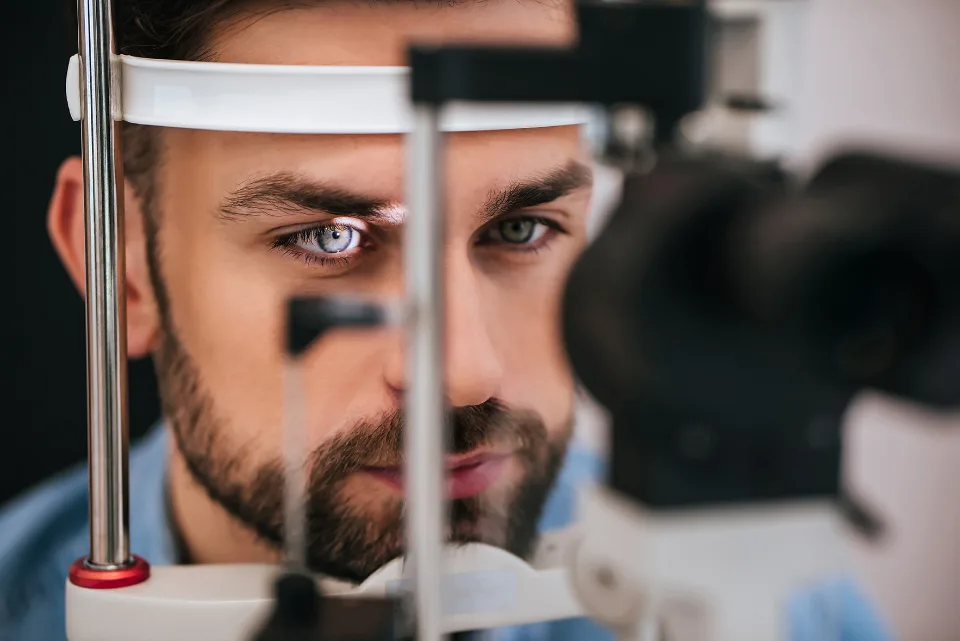
How Diabetes Affects Your Eyes
Understanding how diabetes affects vision is the first step in protecting your sight. The connection between blood sugar levels and your eye health is direct and significant. High blood sugar damages the tiny, fragile blood vessels in the retina, which is the light-sensitive tissue at the back of the eye.
Your vision may fluctuate as your levels rise and fall, which may cause the lens of the eye to swell. Over time, these complications lead to permanent vision loss if left unmanaged. Early monitoring is essential to catch these vascular changes before they lead to permanent vision damage.
Common Vision Problems Caused by Diabetes
While diabetes impacts the entire eye, several specific eye diseases are more common for those managing blood sugar. We monitor for these vision problems during every medical eye exam to ensure your eyes remain healthy.
- Diabetic Retinopathy: During a diabetic retinopathy exam, we look for damage to the retinal blood vessels. This eye condition often begins with tiny leaks and can progress to the growth of fragile new vessels that bleed into the eye.
- Diabetic Macular Edema: This occurs when fluid builds up in the macula, which is the part of the eye responsible for sharp central vision. It leads to swelling that makes reading and recognizing faces difficult.
- Cataracts: People with diabetes often develop cataracts earlier than those without the condition. If this cloudiness interferes with your life, Dr. Proske, O.D., can coordinate your care for cataract surgery.
- Glaucoma: A group of eye diseases that damage the optic nerve, often due to increased pressure within the eye. Diabetes remains a major risk factor for developing this sight-threatening eye condition.
Why Diabetic Eye Exams Are Different from Routine Eye Exams
A diabetic eye exam specifically evaluates retinal health in ways a standard vision checkup does not. We focus on the following steps to protect your sight:
Dilated Eye Exams
Widening the pupil allows our eye doctor to see the retina clearly and provide a full view of the internal structures. This thorough look ensures we see the far edges of the eye where early damage often hides.
Retinal Imaging:
This technology detects small changes in blood vessels that are often invisible during a routine check. We use these high-resolution maps to track your health with incredible precision over many years.
Early Symptom Detection
These eye exams identify problems before symptoms like blurry vision or dark spots ever appear. Catching a whisper of a problem allows us to act before it becomes a loud concern.
Vision Protection
Early detection enables timely medical interventions and lifestyle adjustments to safeguard your long-term sight. These proactive steps give you the best chance at maintaining your independence and quality of life.
How Often People with Diabetes Should Get Eye Exams
Consistency is your most effective tool for protecting your vision over time. Most health professionals recommend that patients with diabetes schedule a comprehensive eye exam annually. This annual habit allows Vision Pro to identify subtle shifts in your retinal health that may otherwise go unnoticed.
Your specific schedule can vary based on your unique health history and current symptoms. If you already manage an existing eye condition, Dr. Proske may suggest more frequent visits to keep your vision stable. These regular checkups are a vital part of your overall diabetes care plan.
What to Expect During a Diabetic Eye Exam
We strive to make your visit comfortable and stress-free while providing a thorough assessment of your vision. Our team walks you through every step of the process to reduce any anxiety you may feel about medical testing.
- Vision Testing: We check your visual acuity to determine if your current prescription is still accurate or if blood sugar levels are causing fluctuations.
- Dilated Retinal Exam: We use gentle eye drops to widen your pupils, which allows our eye doctor to examine the health of your retina and optic nerve.
- Retinal Imaging: Our advanced technology captures high-resolution photos of the interior of your eye for precise monitoring.
- Review of Eye Health: We sit down with you to discuss any vision changes, such as blurry vision, and explain the findings of our eye exam.
- Personalized Recommendations: Our team provides specific guidance on managing your eye health based on your unique results.
Reliable Diabetic Eye Care for Spring Families
Finding a dedicated eye doctor for diabetes in Spring is a major advantage for patients managing chronic conditions. At Vision Pro, we provide comprehensive diabetic eye care using advanced diagnostic technology.
Our patient-focused approach ensures you feel heard and respected during every appointment. Book your next appointment, and we will help you navigate the complexities of diabetes and vision problems.
Diabetic Eye Health FAQs
Can I skip my eye exam if my vision feels fine?
- Many diabetic eye conditions show zero symptoms in their early stages. By the time you notice blurriness or dark spots, damage may already be present. Regular eye exams help us find and manage issues before they affect your daily life.
Does high blood sugar cause temporary vision changes?
- Yes, significant shifts in blood sugar can cause the lens of your eye to swell. This change often leads to temporary blurriness. We usually recommend waiting until your blood sugar stabilizes before we finalize a new prescription for glasses or contact lenses.
Will a diabetic eye exam hurt?
- The eye exam is painless. The primary sensation involves the application of dilating drops, which may sting for a few seconds. After that, you simply relax while we examine your eyes with gentle lights and imaging tools.