
A slit lamp test is designed to have your eyes tell a story that might indicate the presence of many types of eye diseases and potential vision problems.
How does a slit lamp exam work?
A slit lamp examination is relatively quick and largely without discomfort, though your eye may tear or water and you’ll have to resist the urge to blink frequently.
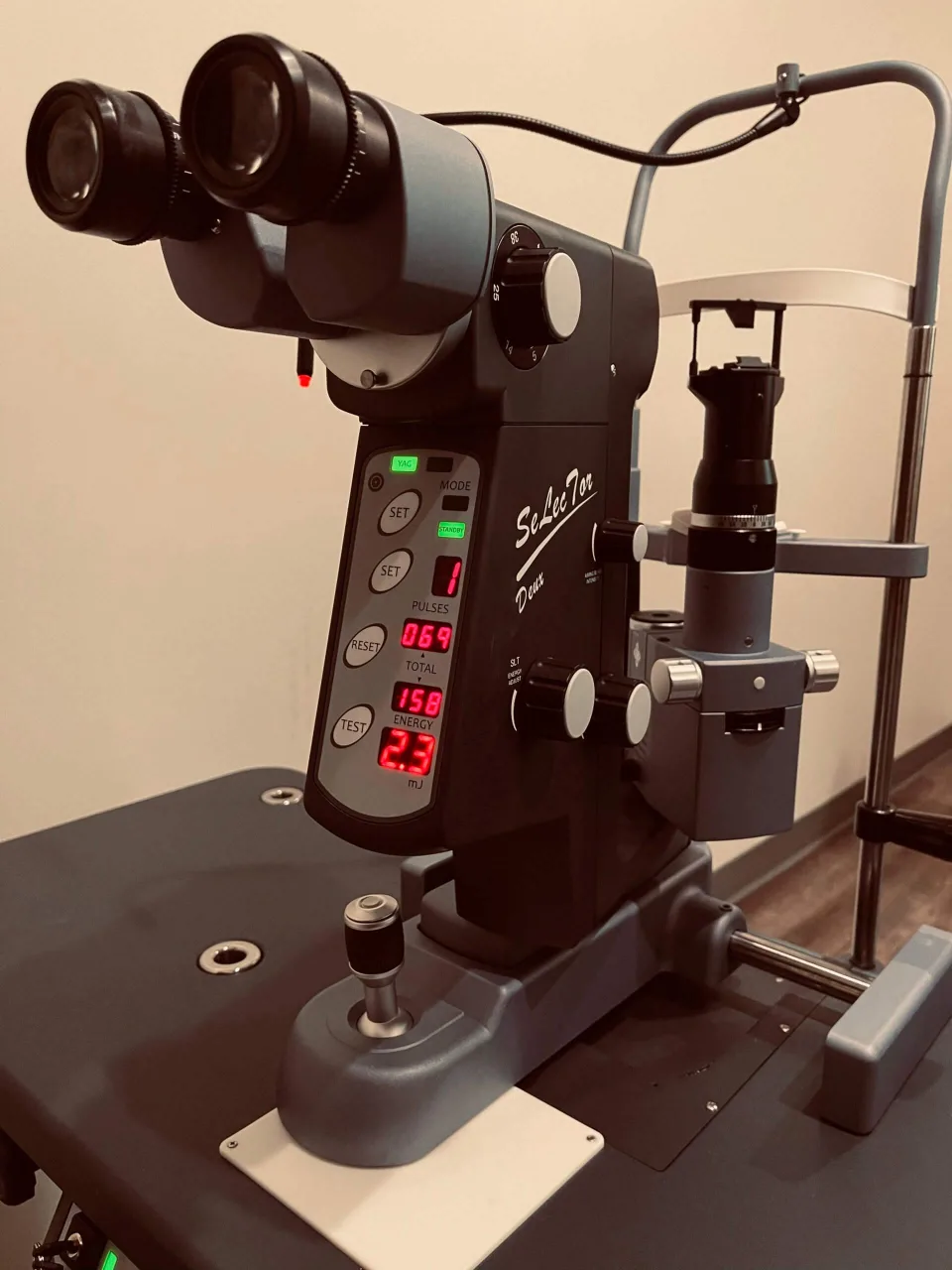
With your head resting in the chin rest of the slit lamp, you’ll look at a light inside the machine while your eye doctor performs a meticulous scan of your eyes using different lenses, much like on a microscope.
Slit lamp tests are ways to magnify what’s happening on the surface of your eye, at the front of the eye, inside the eye, and at the all-important retina at the back of the eye.
A slit lamp test is one of the most common procedures in a comprehensive eye exam because it tells your eye doctor so much about the state of your eye health, and can be used to spot indicators of a wide variety of diseases and conditions including cataracts, glaucoma, diabetic eye disease, age-related macular degeneration, even blood disorders and certain cancers.
Special thanks to the EyeGlass Guide, for informational material that aided in the creation of this website. Visit EyeGlass Guide today!