

Types of vision testing
Visual acuity testing: The Snellen Chart (the chart with the big E at the top) is used to test each eye for visual acuity or “sharpness” at a distance. A smaller, hand-held chart is used to test near vision.
Visual field testing: Manual and automatic testing designed to measure the quality of your side vision (peripheral vision). This type of test usually involves covering one eye and focusing the other on a fixed point in front of you, while describing what you can see on the “periphery” of your vision.
Cover testing: By having you focus on a distant object within a room, and then alternately covering each eye, your eyecare professional can see if your eyes work together, or must refocus slightly.
Color-blind testing: Using a series of multi-colored dots arranged within a circle, color-blind vision testing “hides” numbers within the overall pattern of dots. These numbers will appear as easy-to-see colored numbers to everyone except those few people who suffer from various degrees of color-blindness—the inability to perceive certain colors or color combinations.
Refraction testing: Refraction errors like nearsightedness and farsightedness are the most common eye problems. Vision testing is used to determine how strong your prescription glasses must be to see clearly, based on how your eyes react while using the vision testing equipment.
Phoropters are machines that allow your eye doctor to “switch” lenses during your exam to see if your focus is better, or worse.
Autorefractors are machines that automatically check the lens power needed to clearly focus images on your retina for the best possible vision.
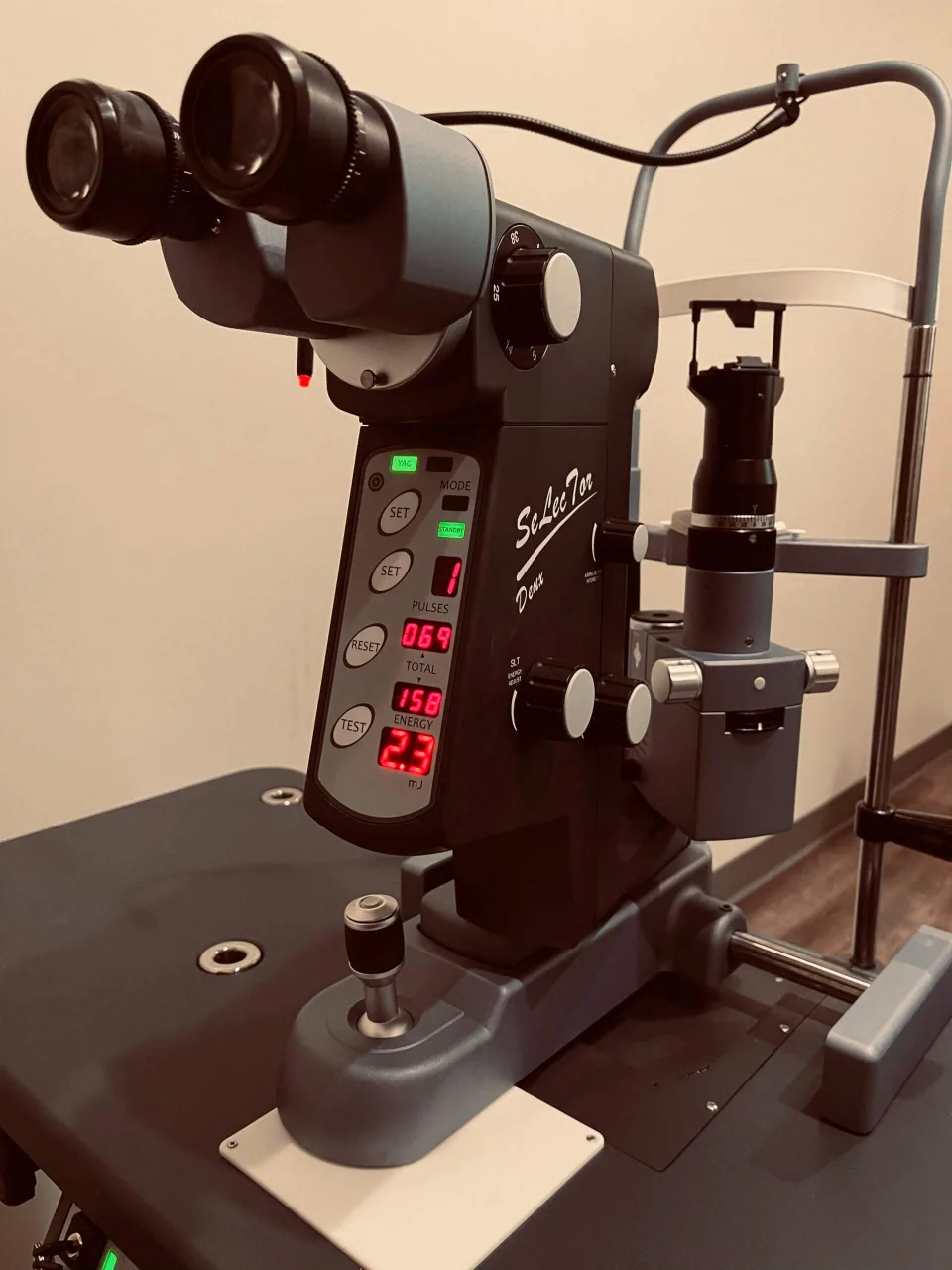
Slit lamp testing: This piece of vision testing equipment combines a simple chin rest with a light source that produces a “slit” of light that’s used scan your eye. Your eye doctor (with the help of special viewing lenses) can look into the internal structure of your eye to potentially diagnose a host of eye problems and diseases.
Tonometry (Glaucoma) Testing: There are two types of glaucoma vision testing, each with the goal of measuring the internal pressure of the eye. Increased eye pressure is a warning sign for glaucoma, a series of eye diseases that damages the optic nerve of the eye, limiting and sometimes eliminating vision.
The “Puffer” Test: A light is beamed into your eye while a gentle puff of air is blown across the eye’s surface. A special machine measures the resistance of the eye to the puff of air, and then calculates internal eye pressure.
The Touch Test: Using a machine called an applanation tonometer, a special probe makes gentle contact with the eye’s surface to measure internal eye pressure. Your eye doctor may numb your eye in advance.
Dilation testing: Sometimes, your eye doctor will use special drops to “open up” your pupil (dilate it) so that as much light as possible can enter the eye. Using special magnifying lenses and other vision testing equipment, your eye doctor can diagnose a host of eye problems and see internal structures that indicate the presence of eye diseases.
Vision testing is both thorough and painless, though there may be some discomfort from direct beams of light momentarily. In addition, the drops used to dilate pupils may take a little time to wear off, so you will be sensitive to bright light, and may need assistance driving after vision testing that includes pupil dilation.
Special thanks to the EyeGlass Guide, for informational material that aided in the creation of this website. Visit the EyeGlass Guide today!